
Choosing the right cardboard thickness is crucial for protecting products, boosting brand image, and cutting shipping costs. This guide breaks down corrugated flute types (A-F) and wall structures to help you pick the perfect option for your packaging needs, whether you’re shipping fragile electronics, heavy industrial parts, or premium retail items.
Why Cardboard Thickness Matters
Cardboard thickness is more important than you might think, as it directly affects four key aspects: product protection, shipment safety, shipping costs, and printing quality. Many businesses overlook this detail, leading to damaged products, higher expenses, or lackluster brand presentation. Understanding its impact is the first step to creating effective, cost-efficient packaging.
-
Protect Your Products
The primary purpose of packaging is to keep your products safe, and cardboard thickness is the foundation of that protection. Thin cardboard sheets are easily crushed, bent, or torn, making them ineffective for fragile or breakable items like glassware, ceramics, or electronics. Choosing the right thickness ensures your products stay intact from the moment they’re packed until they reach the hands of your customers, reducing returns and customer complaints.
-
Safer Shipment
Shipping and handling can be rough—packages are loaded, unloaded, stacked, and moved multiple times during transit. A well-structured, properly thick cardboard box can endure this wear and tear, reducing the risk of damage. It also makes handling easier for carriers, as sturdier boxes are less likely to collapse or tear open, ensuring your products arrive at their destination in perfect condition.
-
Lower Shipping Costs
Shipping costs are primarily based on the weight and size of your packages, and cardboard thickness directly impacts both. Thicker cardboard adds extra weight, which can raise shipping fees—especially for large orders or long-distance shipping. Balancing thickness with the level of protection your products need is key to minimizing expenses without compromising on safety. Using unnecessarily thick cardboard for lightweight, non-fragile items wastes money and increases your carbon footprint.
-
Support High-Quality Printing
In today’s competitive market, packaging is more than just protection—it’s a marketing tool. Vibrant brand printing, including logos, graphics, and product information, helps your packages stand out on shelves or in delivery boxes. Sturdy, properly thick cardboard provides a smooth, stable surface for printing, ensuring your designs look sharp and professional. Thin or flimsy cardboard can warp or absorb ink unevenly, ruining your brand’s visual appeal and reducing brand visibility.
How to Measure Cardboard Thickness
There are three common ways to measure cardboard thickness, each with its own advantages. Understanding these methods will help you choose the right option for your packaging needs, ensuring you get the perfect balance of protection, cost, and performance.
-
Grams Per Square Meter (GSM)
GSM (Grams Per Square Meter) is the most common and precise unit of measurement for cardboard and other packaging materials. It measures the weight of one square meter of the material, which directly correlates to its thickness and strength. For packaging purposes, a higher GSM means thicker, sturdier cardboard. The ideal GSM for packaging ranges from 350 to 400, as this provides enough strength to protect most products. Lower GSM values (35–55) are used for newspapers, 90–100 GSM for standard printing paper, 120–140 GSM for posters, and 210–300 GSM for brochures—all too thin for reliable packaging.
-
Point System (PT)
The Point System (PT) is another popular method for measuring corrugated cardboard thickness. One point (1 PT) equals 1/1000 of an inch, so a 10pt cardboard is 0.010 inches thick. The thickness of the cardboard directly corresponds to its strength—thicker PT values mean stronger, more durable cardboard. The thinnest option for corrugated paper is 8pt, which is suitable for lightweight, non-fragile items, while thicker PT values (12pt and above) are used for heavier or more fragile products.
-
Corrugated Flute Types
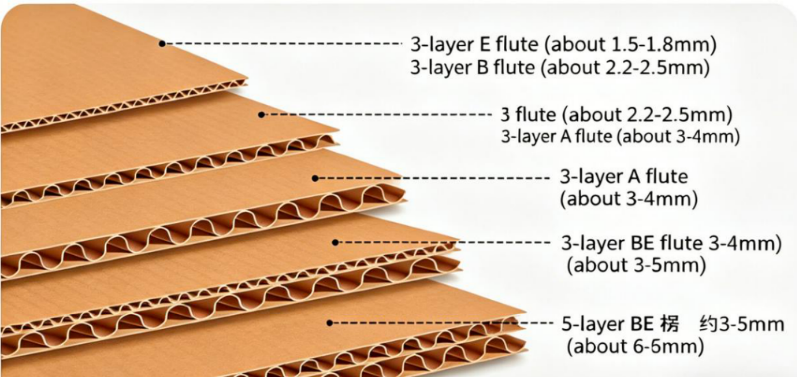
Flutes are the wavy, ribbed layers sandwiched between flat liner boards in corrugated cardboard. They act as a cushioning and support system, and their size determines the cardboard’s thickness, strength, and cushioning ability. Here are the key flute types with their approximate thickness and best uses:
A flute: 5 mm (1/4 inch) thick, best for maximum cushioning—ideal for fragile items like glassware and electronics.
B flute: 3 mm (1/8 inch) thick, offers good rigidity and printability—perfect for retail packaging and branded boxes.
C flute: 4 mm (11/64 inch) thick, a balanced option with good cushioning and strength—great for e-commerce shipping boxes.
D flute: 2 mm (17/200 inch) thick, a specialty middle ground—used for custom or specialty packaging.
E flute: 1.5 mm (1/16 inch) thick, slim and sleek—ideal for premium retail packaging like cosmetic or jewelry boxes.
F flute: 0.6 mm (1/32 inch) thick, ultra-thin—perfect for micro-packaging and high-end gift.
-
Corrugated Board Styles
Corrugated board styles combine flutes and liner boards to create different levels of strength and protection. The number of flutes and liners determines the board’s thickness and durability, allowing you to choose the right option for your product’s needs:
Single-face: Consists of one liner board combined with one fluted layer. It’s lightweight and flexible, making it ideal for inner packaging, dividers, or wrapping delicate items that don’t need heavy protection.
Double-wall: Features three liner boards and two fluted layers. It’s much stronger and more durable, making it perfect for heavy-duty or fragile items that require extra protection during shipping and handling.
Triple-wall: Made with four liner boards and three fluted layers. It’s the strongest option, designed for industrial use, extremely heavy products, or items that need to withstand long-term stacking or rough handling.
How to Choose the Right Cardboard Thickness
Now that you understand how cardboard thickness is measured and why it matters, it’s time to choose the right option for your packaging. Consider these five key factors to make an informed decision that balances protection, cost, and brand needs:
Product type: Start by assessing your product’s weight, fragility, and size. Fragile or heavy items need thicker, stronger cardboard (like double-wall or A/C flutes), while lightweight, non-fragile items can use thinner options. Ensure the box fits the product snugly—too large a box can cause items to shift during transit, increasing damage risks.
Shipping process: If you’re packing products yourself and shipping them directly to customers, prioritize durability to withstand transit. If you use third-party logistics (TPL), they may provide their own packaging, so you can focus on inner protection instead of outer boxes.
Budget: Your packaging budget should include both the cost of the cardboard and shipping fees. Thicker cardboard is more expensive upfront and adds weight, raising shipping costs, so find a balance that provides enough protection without overspending.
Design: If you plan to print logos, graphics, or product information on your packaging, choose cardboard with a smooth surface (like B, E, or F flutes) and a higher GSM. This ensures your designs look professional and vibrant, boosting brand recognition.
Expert advice: If you’re unsure which thickness or flute type is right for you, consult packaging professionals. They can assess your specific needs and recommend the best option to keep your products safe and your costs low.
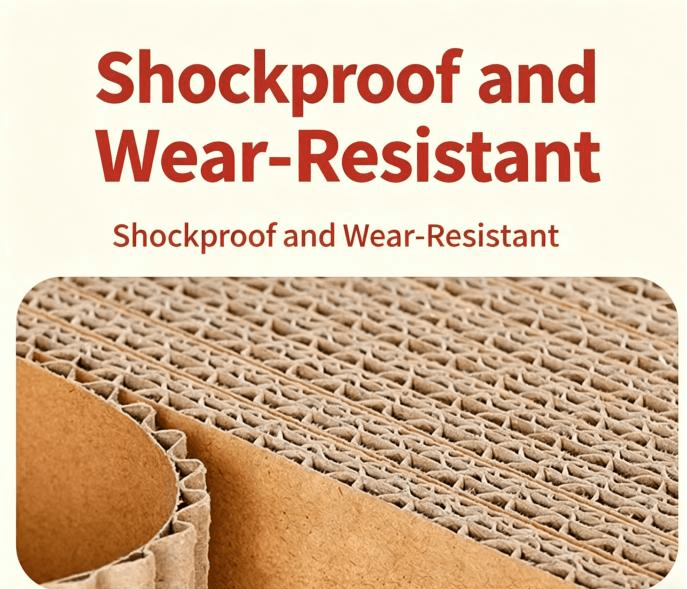
Picking the right corrugated thickness boils down to your unique product needs. At Yucai Factory, our professional team will recommend the most suitable flute and thickness tailored to your products, shipping scenarios and budget, ensuring reliable protection and cost-effective packaging solutions.
FAQ
- Q: What are the four key aspects that cardboard thickness directly affects?
A: Product protection, shipment safety, shipping costs, and printing quality.
- Q: What is the most common and precise unit for measuring cardboard thickness?
A: GSM (Grams Per Square Meter); the ideal range is 350 to 400 GSM.
- Q: What types of products are A-flute, C-flute, and E-flute best suited for respectively?
A: A-flute: Fragile items like glassware and electronics .
C-flute: E-commerce shipping boxes (balanced cushioning and strength).
E-flute: Premium retail packaging such as cosmetic or jewelry boxes.
- Q: What are the typical applications of single-face, double-wall, and triple-wall corrugated boards?
A:Single-face: Inner packaging, dividers, or wrapping delicate items (lightweight, flexible). Double-wall: Heavy-duty or fragile items needing extra protection (strong, durable). Triple-wall: Industrial use, extremely heavy products, or items for long-term stacking (strongest).
- Q: What five main factors should be considered when choosing the right cardboard thickness?
A: Product type, shipping process, budget, design, and expert advice.
- Q: Why does using unnecessarily thick cardboard lead to extra costs?
A: Thicker cardboard is more expensive upfront, adds extra weight, which raises shipping fees, and increases the carbon footprint.
Post time: May-06-2026