
Unlike regular measurement tips, this guide is made just for international needs. It shows you how to measure boxes the right way, figure out volume to ship more efficiently, and use exact sizes to pick the best custom packaging. To put it simply, learning these skills saves you money on logistics, protects your products better, and makes your brand look more professional in global markets.
Dimensions of a Box
Measuring box standard size, but International shipping demand extra precision to align with specific carrier rules (e.g., DHL, FedEx) and international shipping regulations. Here’s the step-by-step process for accurate box dimensions:
Step 1: Identify the Three Dimensions
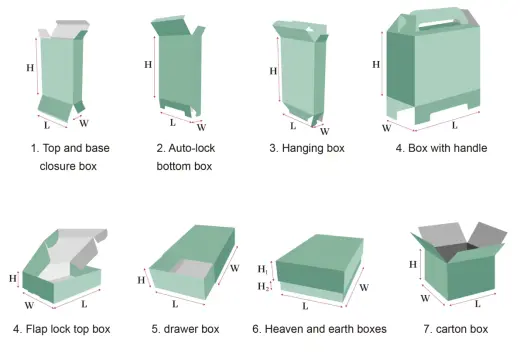
All boxes have three key measurements: Length (L), Width (W), and Height (H). For consistency, follow this definition:
- Length: The longest side of the box’s base (when closed).
- Width: The shorter side of the base.
- Height: The vertical distance from the base to the top flap (closed).
For irregularly shaped boxes (e.g., tapered or custom-sized), measure the maximum point of each dimension to avoid underestimating space.
Step 2: Use the Right Tools
Use a rigid measuring tape instead of a flexible ruler for better accuracy, since bending can distort measurements. When measuring, go from edge to edge and exclude any flaps, handles, or protrusions—these are handled separately in carrier calculations. For corrugated boxes, use inner dimensions for a snug product fit, but outer dimensions for shipping cost estimates.
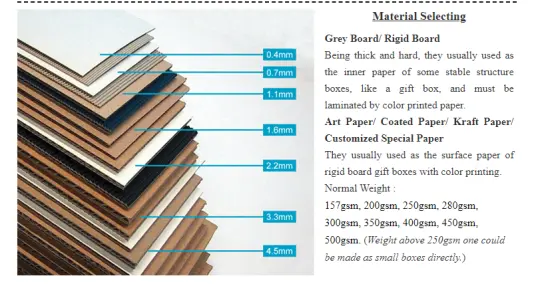
Step 3:Packaging Materials
In situations where your product requires internal padding (e.g., bubble wrap, foam inserts), you would typically add 0.5–1 inch to each dimension when placing an order. custom-manufactured boxes. This ensures that the product fits securely within the packaging and does not shift excessively during shipping. For fragile items such as electronics or glassware, it is best to work with a supplier that provides 3D modeling to optimize the packaging dimensions for both protection and cost—our team has specific expertise in this area for international customers.
Consideration International dimension Note: Carriers use outer dimensions to calculate DIM weight, whereas product fit depends on inner dimensions. Because of this difference, you should always confirm both measurements with your packaging supplier to avoid any discrepancies. Our custom boxes are manufactured to exact inner and outer dimension specifications, which eliminates guesswork.
Calculating Box Volume
The volume of a box is critically important for two key foreign tasks: determining DIM weight (which directly influences shipping costs) and optimizing how warehouse and storage space is used. In practice, calculating volume is fairly straightforward, but accuracy remains absolutely essential to avoid any financial losses.
Volume Formula
Volume (cubic inches) = Length × Width × Height
For metric units (used in most global markets): Volume (cubic centimeters) = Length × Width × Height
Example: A box with L=12in, W=8in, H=6in has a volume of 12×8×6=576 cubic inches.
DIM Weight
Dim weight calculator to account for the space a package occupies. The formula varies by carrier, but a common international standard is:
DIM Weight (lbs) = Volume (cubic inches) ÷ 139
When your package's DIM weight exceeds its actual weight, you end up paying for the DIM weight instead. For example, if you have a 5lb box with a DIM weight of 8lb, you'll incur fees for 8lb. Running accurate volume calculations lets you optimize box size to minimize DIM weight charges—saving roughly 15–30% onforeign (international) shipping costs overall.
Conclusion
Accurate measurement of box dimensions and precise volume calculation serve as the foundation for effective international packaging and shipping. In practice, by adhering to correct measurement procedures, accounting for padding materials and carrier requirements, and utilizing accurate volume data, businesses can reduce shipping costs, minimize product damage, and streamline logistics workflows—advantages that prove critical in today's competitive global marketplace. For independent station operators specifically, partnering with a supplier who thoroughly understands the unique measurement demands of international shipping becomes essential for translating these capabilities into concrete cost savings and enhanced brand credibility.
Why Choose Yucai-Printing for Your Custom Boxes:
In-House Factory: Through direct manufacturing control, we can ensure your boxes meet exact dimension specs, typically achieving 20–30% cost savings versus middlemen. Every box is tailored to your product's measurements, eliminating ill-fitting packaging.
- High Quality: Our corrugated boxes and custom packaging use premium materials, with rigorous checks to ensure consistent dimensions and strength—critical for protecting products during international transit.
- Full Customization: From precise dimension tuning to branding and finishes, we create boxes that fit your product and brand. We provide 3D mockups to verify fit before bulk production.
Reliable foreign logistics services offer fast production turnaround: 7–10 days for standard orders and 3–5 days for rush requests. International shipping via DHL/FedEx takes 3–10 days, and includes double clearance, tax-included pricing, and door-to-door delivery. The provider handles all customs paperwork to avoid delays from dimension-related discrepancies.
- Expert Support: Our team offoreign packaging specialists helps you optimize dimensions for DIM weight, container space, and product protection—saving you time and money.
Invest in precise box dimensions and custom packaging that elevates yourforeign operations. Contact us today to get started with tailored solutions.
FAQ
Q1: Do I measure box dimensions from the inside or outside forforeign shipping?
For calculating DIM weight and shipping costs, you should measure the outer dimensions because carriers rely on external specifications. Meanwhile, inner dimensions are needed to verify product fit—our team provides both measurements when creating custom boxes to ensure alignment.
Q2: How do incorrect box dimensions affectforeign shipments?
A: Incorrect dimensions lead to DIM weight surcharges, damaged products (ill fit), customs delays (mislabeled packages), and wasted storage/container space. These issues can add 20–40% to logistics costs.
Q3: Do you offer custom boxes in non-standard dimensions for uniqueforeign products?
A: Absolutely. Our specialization lies in non-standard and custom dimensions, and we impose no minimum order quantity (MOQ) restrictions for the majority of size categories. The factory can produce boxes tailored to any product's unique shape or size, delivering the same fast turnaround and quality guarantees in every case.
Post time: Jan-28-2026