
Within the broader context of global foreign trade and international logistics, corrugated boxesserve as the fundamental support system for shipping products and protecting them from damage. When compared with ordinary packaging alternatives, corrugated solutions strike a balance between strength, affordability, and customization—a combination that renders them indispensable for businesses engaged in cross-border shipping. For independent station operators,
Corrugated Box Definition
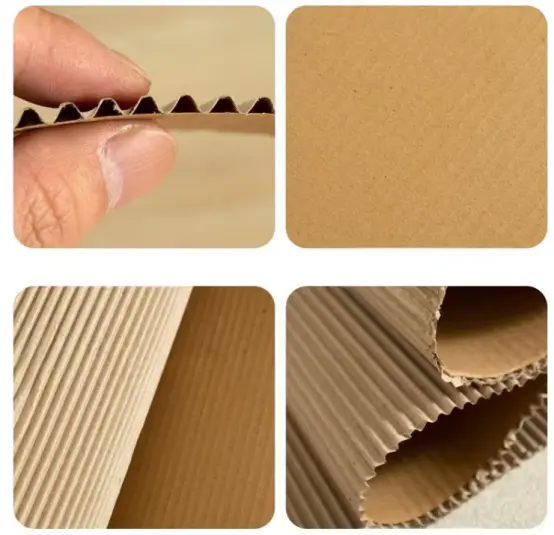
A typical corrugated box, as a packaging category, is fundamentally a rigid packaging solution built from corrugated board—an engineered material constructed from a fluted (wavy) inner layer that is sandwiched between two flat outer liners (commonly known as linerboard). In this arrangement, the fluted layer contributes structural integrity, whereas the liners provide a smooth surface suitable for printing. In contrast to single-layer cardboard, corrugated board is specifically designed to withstand impact, stacking pressure, and moisture exposure, all of which are key requirements for international shipping whether transported by sea, air, or land freight.
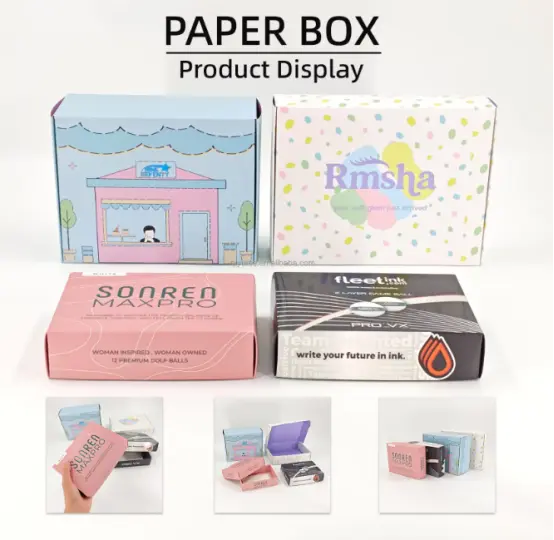
Corrugated Flute Types & Grades
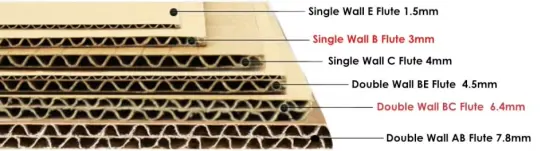
Corrugated flute types determine the box’s strength, cushioning, and thickness. The three primary flute grades for foreign trade are:
-
Single Wall Board
Single wall board consists of one fluted layer positioned between two liners, forming the most basic structure among corrugated packaging materials. This configuration has become the most common and cost-effective choice for lightweight products—such as apparel, small accessories, and similar items—since it provides adequate protection without adding unnecessary material costs.
-
Double Wall Board
Double wall board adds a second fluted layer and liner, which essentially doubles the strength of single wall options. This makes it a practical choice for fragile or heavier items—electronics and glassware are common examples—as well as for long-haul sea freight where durability is crucial.
-
Triple Wall Board
Triple wall board—constructed with three fluted layers—is the strongest corrugated option available, designed specifically for heavy-duty industrial products such as machinery parts and large equipment.
Cardboard vs. Corrugated: Differences
Many businesses confuse cardboard and corrugated, but the two materials differ significantly—especially for foreign trade:
-
Design
Cardboard is a single-layer material—commonly known as paperboard—that serves everyday retail packaging needs, such as the boxes used for cereal. Corrugated, by contrast, is a multi-layer engineered material built with fluted inner layers. For foreign trade purposes, this layered construction gives corrugated far more structural support than cardboard can deliver.
-
Strength
Regular cardboard is inherently weak and prone to bending or tearing, which makes it poorly suited for shipping. Corrugated material, on the other hand, uses fluted layers that distribute weight and absorb impact, allowing it to withstand the pressures of international transit and stacking—strength that plain cardboard simply cannot match.
-
Protection
Standard cardboard provides only minimal protection, while the cushioning flutes built into corrugated cardboard help shield products from the shocks and vibrations that commonly occur during shipping. For fragile or high-value foreign trade items, corrugated packaging remains the only reliable choice.
-
Customization
Cardboard has limited printing and structural customization. Corrugated supports full-color printing, embossing, and custom sizes/shapes—critical for branding and fitting unique product dimensions in foreign trade.
Corrugated Packaging Benefits
Corrugated packaging offers unmatched advantages for foreign trade businesses:
Ultimate Protection
The fluted design absorbs impact and resists crushing, which in practice can reduce transit damage by up to 80% compared to conventional cardboard or plastic packaging. This practical benefit means fewer returns and negative reviews, which is critical for maintaining a strong brand reputation in global markets.
Cost-Effective
Corrugated packaging remains affordable to produce, particularly when manufactured in bulk. Its inherently lightweight nature helps lower dimensional weight shipping fees, while its recyclability also reduces waste disposal costs. For small foreign trade businesses working with limited budgets, it provides premium protection without the burden of premium pricing.
Sustainable
Corrugated packaging is fully recyclable and produced from renewable resources, specifically FSC-certified wood pulp. Since it meets major global sustainability regulations—such as the EU Packaging Waste Directive—it helps avoid customs delays and appeals to buyers who prioritize environmental responsibility.
Lightweight
Corrugated's high strength-to-weight ratio is effective at keeping shipping costs low. Unlike heavy wooden crates, it avoids adding unnecessary weight to shipments, which in turn makes it a practical choice for international air and sea freight.
Choosing the Right Corrugated Box Size for Your Products
Selecting the correct size is critical for protection and cost savings in foreign trade. Follow these steps:
1. Take Measurements of Your Product: Begin by calculating the length, width, and height (L×W×H) of your product, and be sure to include any protective padding such as bubble wrap in those measurements.
2. Include Clearance Space: You should leave approximately 0.5 to 1 inch of space on all sides for cushioning material; however, too much space can cause the product to move around, while too little space may lead to damage.
3 . Account for Dimensional Weight: Since carriers charge by dimensional (DIM) weight, which reflects the space a package occupies, it is wise to avoid oversized boxes. In our own process, we use 3D modeling to find the optimal size that ensures protection while keeping costs down.
4. Tailor Box Size to Product Type: Fragile items often require a slightly larger box to allow for extra padding, while lightweight items can typically use a snugger fit to help reduce overall shipping weight.
Where to Customize Corrugated Packaging Boxes
For foreign trade businesses, partnering with a factory-direct supplier ensures quality, customization, and reliable logistics. Here’s why we’re the top choice for custom corrugated boxes:
In-House Factory: Since we operate our own state-of-the-art manufacturing facility, we can eliminate middlemen and pass along cost savings of 20–30% directly to you. Direct control over production ensures consistent quality and fast turnaround, with most standard orders completed within 7 to 10 days.
Uncompromising Quality: Our corrugated boxes use premium linerboard and flutes, and they go through three or more quality checks to ensure strength and print clarity. We meet international standards (ISO 9001), and our defect rate is kept below 0.5%—a level that is critical for foreign trade reputation.
Full Customization: Tailor size, flute type, printing, and finishes (lamination, foil stamping) to your needs. We provide 3D mockups and physical samples for approval before bulk production.
Reliable Foreign Trade Logistics: Fast international shipping via DHL or FedEx (3–10 days), double clearance included, tax-included pricing, and door-to-door delivery. We handle all customs paperwork to avoid delays and unexpected fees.
Conclusion
Corrugated boxes serve as a practical packaging solution for foreign trade businesses, delivering reliable protection, noticeable cost savings, and broad customization options. When companies develop a working knowledge of flute varieties, box configurations, and size optimization, they can select packaging that not only safeguards products from damage but also cuts freight costs and enhances brand recognition overseas. This versatility makes corrugated suitable for shipping electronics, apparel, or industrial equipment alike, all while meeting international regulatory requirements.
FAQ
Q1: What is the corrugated box production process in practice?
A: Production involves sourcing linerboard and fluting paper, corrugating them to form the fluted layer, gluing layers together, cutting to size, and finally printing and finishing. In our factory, we use automated equipment for precision, with quality checks at every stage—from material sourcing all the way through to final packaging.
Q2: Any other tips for choosing corrugated box sizes?
A: You should avoid overpacking, as stacking heavy items in oversized boxes increases crushing risk. For irregularly shaped products, use custom inserts to fill gaps. Always test a sample box with your product first to verify fit and protection before bulk ordering.
Q3: Are there further benefits of corrugated packaging in foreign trade situations?
A: Yes—corrugated is easy to label, which is critical for customs documentation, and its stackable nature really helps maximize container space. It also resists moisture, especially with optional coatings, protecting products during sea freight in humid conditions.
Post time: Jan-23-2026