
1.Shipping Box Sizes & Dimensions
Before choosing a size, sellers need to grasp the fundamentals of shipping box dimensions, a topic that often trips up cross-border traders. Carriers such as DHL, FedEx and UPS label every carton with three figures: length, width and height, always written in that order. Length refers to the longest edge, width to the shorter edge of the opening, and height to the vertical distance from base to top.
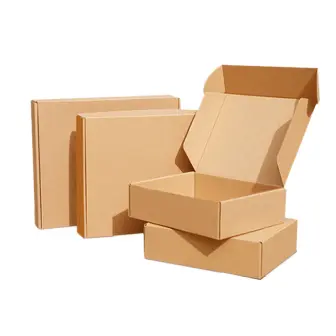
Standard shipping boxes are limited to a handful of fixed sizes—say 12×10×8 inches or 18×14×12 inches—yet these off-the-shelf options seldom match the varied shapes of (foreign trade) products. Custom shipping boxes, on the other hand, are cut to the precise length, width and height of each item, removing the need to estimate. A small electronics label might order a 6×4×3 inch carton for phone chargers, while a clothing retailer could ship folded jackets in a 20×16×4 inch box.
2.Why Shipping Box Size Matters
Box size is more than a logistical footnote; it shapes every leg of the international shipment, from factory floor to the moment the customer lifts the lid. Getting it right is not optional.
Product Protection: The greatest danger of a poorly sized box is product damage. When the carton is too large, goods slide around in transit and arrive scratched, dented, or broken—glassware and electronics are especially vulnerable. A 2024 Packaging Federation study showed that foreign-trade brands shipping in right-sized packaging cut damage by 58 % compared with those using standard cartons. On the other hand, an overly tight box can crush delicate items and turn a likely repeat buyer into a dissatisfied one.
Cost EfficiencyDIM weight pricing charges oversized cartons at the higher volumetric rate. A 15-inch cube that contains a 5-inch item, for instance, is billed for the carton’s full volume, not the product’s mass. Across a thousand shipments, the surcharge can run into thousands of dollars. Boxes cut to the product’s dimensions also save on material, since no extra corrugated board is wasted on void space.
Brand PerceptionA box that hugs the product telegraphs care and professionalism. Shoppers register the absence of rattling peanuts and wasted air; the snug fit alone heightens the unboxing moment and seeds trust—an edge forbrands pitching themselves to overseas buyers.
3.Step-by-Step: Choosing the Right Custom Shipping Box Size
Selecting the perfect custom shipping box size is a straightforward process when you follow these steps—tailored specifically for (foreign trade) products:
Step 1: Measure your product precisely
Use a tape measure to record the length, width, and height. For irregular shapes—gift baskets or curved electronics—take the largest points so the packaging fits snugly. When several items share one box, assemble them as they will be shipped and measure the whole bundle; do not estimate from single-item dimensions.
Step 2: Add Cushioning Allowance
Every product requires a thin buffer—bubble wrap, foam, or similar—to absorb shocks. Increase each measured dimension by 0.5–1 in.; for fragile glass or ceramics, allow 1–2 in. of extra space so padding can be added without forcing the item into an oversized box.
Step 3: Consider Shipping Mode and Transit Conditions
International shipments spend more time in transit and pass through more handling points than domestic orders. If the carton will move by sea—where humidity and rough treatment are routine—choose a slightly stronger box of suitable size to endure the journey. For air freight, keep the package compact to limit dimensional weight surcharges.
4.Custom vs. Standard Shipping Boxes: Which Is Better?
For (foreign trade) businesses, the choice between custom shipping boxes and standard boxes is clear—but it’s important to understand the tradeoffs:
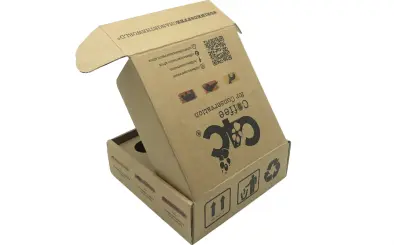
Standard Shipping BoxesStandard cartons can be picked up at once and keep the first payment low for small batches. The downside is size mismatch: freight charges rise, goods get damaged more easily, and surplus filler is thrown away. Plain brown board also leaves no space for branding, so visibility in overseas markets stays limited. In short, they work as a stop-gap, not as a sustained lever for growth. (foreign trade)
Custom Shipping BoxesWhile ordering small runs of custom boxes incurs a modest premium at checkout, the cumulative payoff quickly eclipses the difference.A snug fit lowers both damage rates and freight bills.
Exterior panels become free ad space for logos, colour schemes or short messages.
Right-sized blanks generate less scrap, helping sustainability targets stay on track.
Dimension tweaks scale with the product mix, so the same box family grows alongside the catalogue.
5. Enhance Unboxing Experiences with Custom Shipping Boxes
The moment a customer opens the package sets the tone for the brand, and the box dimensions decide whether that moment delights or disappoints. Foreign-trade companies, in particular, rely on this first physical encounter to leave a lasting impression.A snug, made-to-measure carton erases the let-down of rattling emptiness that oversized parcels bring.Match that fit with the following details to turn the unboxing into a memorable ritual.
Branded InsertsUse tissue paper, stickers or thank-you cards cut to size so they lie flat against the box walls. When the carton fits the contents snugly, the inserts stay in place and the unboxing impression stays crisp.
Functional Design: Equip the carton with an easy-tear strip or a resealable flap sized to the product. A compact beauty pack opened by a tear strip removes frustration, while a larger apparel box that re-closes gives shoppers a ready-made storage container.
Sustainability Messaging: Highlight that your box is “Perfectly Sized to Reduce Waste” on the packaging. Eco-conscious customers appreciate this transparency, and it reinforces your brand’s values.
For (foreign trade) brands, a great unboxing experience leads to social media shares and word-of-mouth referrals—extending your brand’s reach to new global markets.
6. Why Choose Us for Your Custom Shipping Boxes
For foreign-trade operators, choosing the right custom-shipping-box supplier is as critical as the box itself. Our factory-direct edge tackles your sizing, cost, and logistics headaches.
Our own factoryWe run a fully integrated, cutting-edge plant that removes intermediaries and channels every dollar of savings straight to you. As a result, custom sizes cost 20–30 % less than comparable third-party quotes. Because we oversee sourcing, cutting and every stage in between, batch-to-batch consistency is built in.
Uncompromising QualityWe select FSC-certified corrugated cardboard and run rigorous checks: every box is measured for strength and fit, so it survives the knocks offoreign-trade transit with defect rates kept under 0.5%.
Every box is built to your precise dimensions and brand identity, down to the print method—CMYK or PMS—and the finish, whether matte lamination, foil stamping, or another effect. To let you approve size and design before production begins, we supply 3D renderings and physical prototypes.
Reliable (Foreign Trade) Logistics: Standard orders leave our facility within 7–10 days, and rush slots can be arranged. DHL or FedEx handle the international leg, while our bundled customs clearance and prepaid-duty service keeps shipments from stalling at the border. Boxes travel straight to your warehouse or fulfillment center, and live tracking lets you follow each move.
Dedicated support: a personal account manager fluent in foreign-trade sizing guides you from sample selection to delivery and resolves issues promptly.We recognize the distinct hurdles of global logistics and shape solutions to fit your market.

7. Conclusion
At our plant, we focus on supplying tailor-made shipping cartons that match your product dimensions, brand identity and cost limits.custom shipping boxesBacked by strict quality checks, deep customization know-how and proven foreign-trade logistics, we act as a dependable ally for worldwide distribution. Invest once in the correct box size and you will see tangible gains in throughput, cost control and end-customer satisfaction.
FAQs
Q1: How do I determine the dimensional weight of my custom shipping box?
A: Divide the box’s length × width × height by the carrier-specific DIM factor—139 for international air, for example. Our team handles the arithmetic so the shipment stays cost-effective.
Q2: Can I get custom boxes for irregularly shaped(foreign trade) products?A: Certainly. We measure the item and create a box that follows every contour, whether curved, cylindrical, or bulky, so it fits without excess space.
Q3: How long does it take to receive custom shipping boxes for international orders?
A: Production runs 7–10 days, followed by 3–10 days of international transit through DHL or FedEx. Double clearance is arranged to keep the shipment moving.
Q4: Can I receive a sample to check the box size and quality?
A: Yes—physical samples ship within 2–3 days, letting you confirm fit, strength, and design before committing to a full order.
Post time: Dec-02-2025