
Corrugated boxes are ubiquitous in our homes and workplaces – whether you work in an office, a garage, a retail establishment, a restaurant, a fire station – or pretty much anywhere.
Most products are shipped in corrugated boxes and many products remain in these boxes for convenient storage. Many retail packaging boxes serve multiple functions before they work their way to the recycling plant.
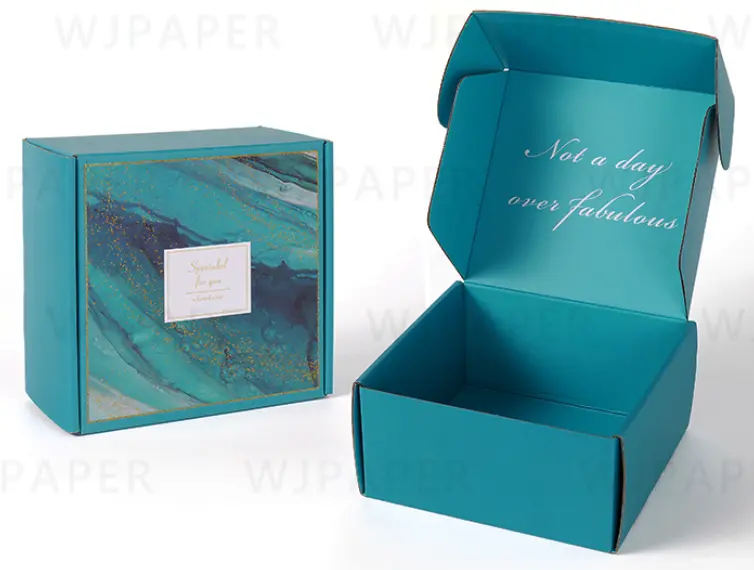
It's no surprise that the corrugated cardboard packaging industry is thriving. With growing demand from e-commerce and a rising trend among consumers toward more eco-friendly packaging options, this sector should not slow down in the short term. Here are the key figures:
In 2023, the volume of corrugated cardboard shipments to the United States is expected to reach approximately 443 billion cubic feet.
In 2019, the corrugated cardboard market exceeded $262 billion and is projected to approach $400 billion by 2025.Over 95% of goods consumed in North America are packaged and transported in corrugated cardboard boxes.
The United States has more than 1,100 corrugated cardboard manufacturing plants.
Corrugated cardboard offers effective protection, excellent value for money, and great customization flexibility.
What’s not to love?
Deconstructing the Corrugated Box
Most people refer to corrugated boxes as "cardboard boxes," but technically, they are not the same.
This can lead to some confusion regarding related terms. Cardboard is a heavy paper typically used to make foldable packaging and other applications.
You may notice that the folding carton boxes displayed on supermarket shelves are usually made of cardboard. For example, cereal or cheese pouches—these packages are unlikely to remain intact during transport. If you send such a box, it's highly likely to be completely damaged upon arrival.
In contrast, corrugated boxes prioritize strength.
They consist of an inner lining and an intermediate layer, two panels bonded together with glue. They are generally made of three layers of fiberboard, though they can also be thicker.
The outer layer is called the "liner panel," abbreviated as "liner." It is a flat material typically located outside the panel, but it may sometimes appear inside in double or triple-layer structures.
The intermediate layer is corrugated and is called "corrugated cardboard." This internal structure provides corrugated boxes with their strength, which explains their widespread use in transportation and storage.
Paper: The Fundamental Building Block of Corrugated Boxes
The corrugated boxes mainly use two types of paper: kraft paper and test paper.
Generally, the inner paper is made of test paper, while the outer paper is made of kraft paper.
Kraft paper is more expensive than test paper, but it is of better quality.
It is made from woody trees such as pine, fir, or cypress, containing between 70% and 80% of raw chemical pulp fibers. There are several versions, such as brown, white, tinted, fully floated white, or beech wood.
The surface of kraft paper is smoother, providing better printing quality. It also has better impermeability, protecting the contents inside better. Due to its increased resistance to tearing and breaking, it is more solid than test paper.
Test paper is usually made from short-fibered hardwood, such as oak, willow, beech, or chestnut, or from recycled paper. It is less expensive than kraft paper, but less durable and more difficult to print on. That's why it is often used inside the packaging to reduce its visibility
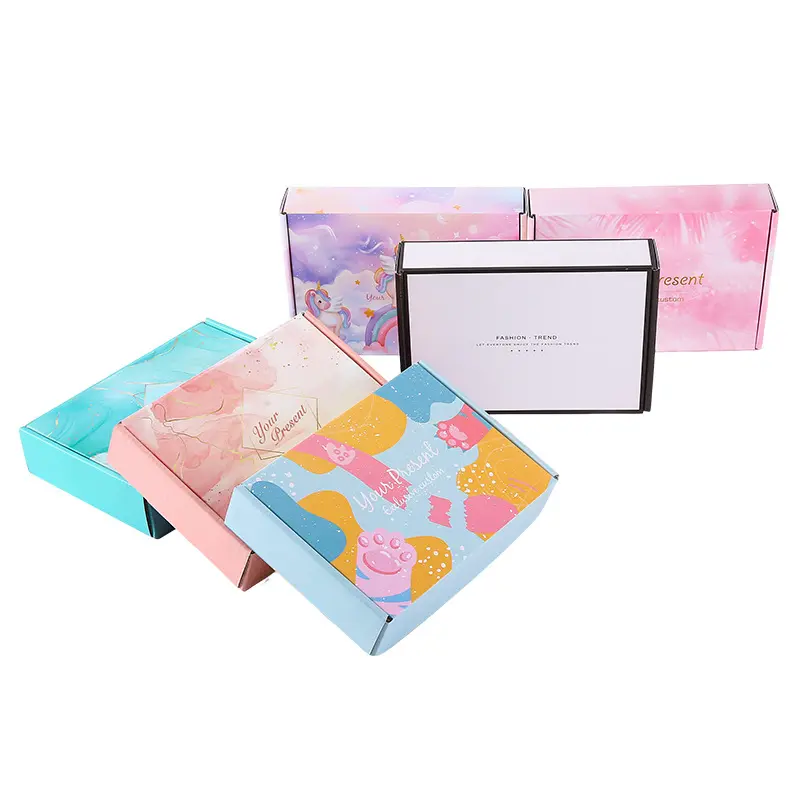
Corrugated Flute Grades: How to Choose the Right One.
The flute (the wavy part sandwiched between the liner) is what sets corrugated boxes apart from their cardboard cousin.
The flute size determines the thickness of the box walls and gives the box its stacking strength. Flutes are referred to by a letter that designates its size. They are measured by thickness and how many flutes per linear foot. Here are the most common flute sizes:
- A-Flute (33 flutes per linear foot) is the largest flute at 1/4” thick. Its thickness offers lots of protection and makes it a good option for fragile items.
- B-Flute (47 flutes per linear foot) is 1/8” thick. This is a lot thinner than A-flutes, but it’s deceptively strong. It’s often used for counter displays or canned goods. This flute is popular for die-cut designs.
- C-Flute (39 flutes per linear foot) is 3/16” thick. This is the one you’re probably the most familiar with, since it’s the most popular option for shipping boxes.
- E-Flute(90 flutes per linear foot) is only 1/16” thick, so it’s pretty thin. It doesn’t offer the strength of the larger flutes but does have some advantages. It’s sometimes used instead of paperboard for folding carton boxes. It’s efficient to store and is good for printing.
F-Flute (125 flutes per linear foot) is 1/32” thick and is among the thinnest of the flute grades. It has a very smooth surface, so printed graphics will look sharp.
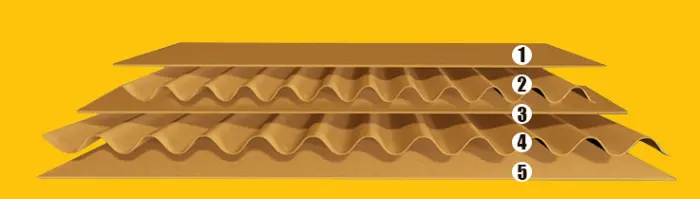
Choosing the Perfect Wall Type for Custom Corrugated Cartons
Even if you know what flute size you want, you still have some important decisions to make.
Corrugated packaging comes in all types of wall thicknesses. Sometimes you only need a little protection for your products, while other times you want something heavy-duty. Here are your wall type options:
- Single-face: This is usually sold in rolls and is a single sheet of liner attached to one sheet of corrugated medium. It offers extra cushioning for delicate items. You might use this for added protection if you’re shipping something like wine glasses.
Single-wall: This is one sheet of corrugated medium glued between two sheets of the liner. It’s the most common and is probably what springs to mind when you think of a corrugated cardboard box.
·Double-wall: This is more durable but less flexible.
·Triple-wall: This is the strongest, with three stacked corrugated sheets and four liner board facings. It’s used for industrial parts or sometimes for produce bins.
Benefits of Corrugated Shipping & Packaging Boxes
Unrivaled Protection for Transportation
Corrugated boxes can protect even the most fragile items, including glass and chemical liquids. The tear-resistant qualities of corrugated cardboard are hard to beat and they have the added advantage of guarding against moisture, so food items are kept fresh.
The durability of corrugated boxes are one reason why so many companies use them as a staple of their shipping and fulfillment strategies.
Cost-Effective
Corrugated boxes are relatively low cost to manufacture. Most of the time, custom boxes cost less than you might expect. Also, because they’re lightweight and can be easily stored, you can save money on storage and transportation costs.
Environmentally-Friendly
In most places, simply unpack the box and place it at the drop-off point near the road is sufficient.
According to data from the U.S. Environmental Protection Agency (EPA), in 2018, out of a total of 33.9 million tons of recycled paper and cardboard, approximately 32.1 million were recycled as corrugated cardboard, achieving a recycling rate of 96.5%.
Corrugated cardboard packaging is made from a high proportion of recycled materials (typically between 70% and 100%), which can be produced from fast-growing pine pulp or wood chips and other waste materials.
Most corrugated cardboard manufacturers use paper sourced from sustainable forests. No reputable paper company illegally deforests primary forests.
No, on the contrary.
In fact, to maintain their supply, paper companies implement certain measures, such as using young saplings to replace already felled trees.
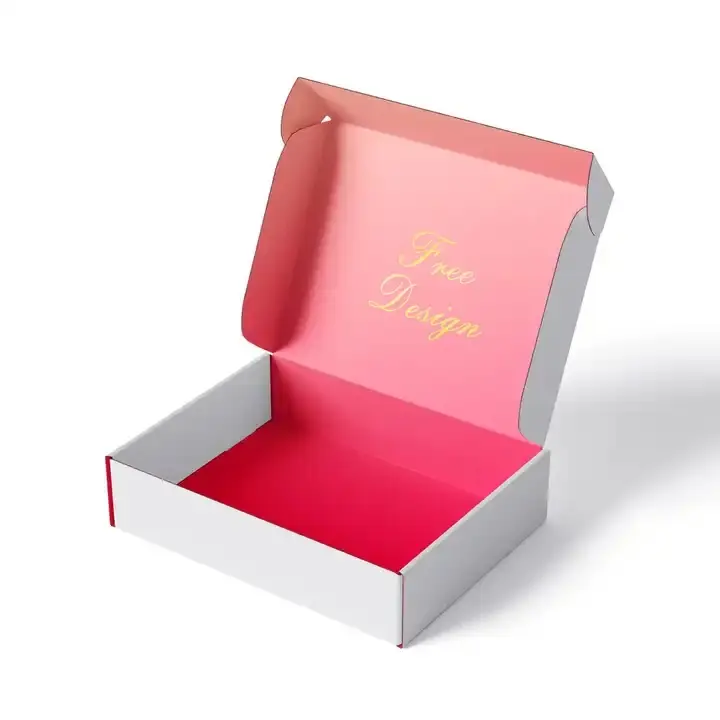
Get Started With Customizable Corrugated Boxes From Yucai
Corrugated paper has come a long way since its introduction in 1856, when it was used as a liner for top hats. It’s hard to believe that something that’s been around since the 19th century is still so widely used today. There have been some improvements made to the material during the intervening years, but there’s a reason corrugated boxes have had such staying power.
No matter your business, corrugated boxes offer many options.
They can protect your goods, they’re easy to transport and store, they’re affordable, they can pump up your brand recognition, and they’re one of the better packaging options out there in terms of the environment. These boxes will likely be storing and moving items from one place to another well into the next century.
FAQ
1. What is the MOQ for custom boxes?
No MOQ, more quantity, lower unit price.
2. Can I order a sample before mass production?
Yes. Yucai provides samples so you can check size, material, print quality, and overall appearance before placing a large order.
3. How long does production usually take?
Production time depends on customization and order quantity. Standard orders typically take 7–15 business days, while complex designs may require additional time.
4. Will custom boxes increase shipping costs?
Not necessarily. Choosing the right size and lightweight materials can help reduce unnecessary shipping expenses.
5. Can I customize the box size for my products?
Yes. Custom sizing is available to better fit products, reduce movement during shipping, and improve presentation.
6. Are custom boxes suitable for international shipping?
Yes, but material strength and box structure should match shipping distance and product fragility.
7. Can I reorder the same packaging design later?
Yucaisave design files and specifications, making future reorders faster and more consistent.
Post time: Jun-30-2026