
In footwear retail, e-commerce transportation or brand packaging, the size of the shoe box - often overlooked - is of vital importance. It affects transportation costs, storage, product protection and unboxing experience; Mastering its measurement method can save time, money and trouble for sellers and brands.
Why is The Accurate Size of A Custom Shoe Box Important
Before research "how to get the right shoe size?", let's first figure out "why do you need to get the right size?". Incorrect shoe box sizes can lead to a series of problems, damaging your bottom line and brand reputation
- Shipping Cost Waste: The carrier calculates the freight based on the dimensional weight (length × width × height), not just the actual weight. A box that is too large will result in higher shipping costs, while a box that is too small may damage the shoes during transportation.
- Poor Product Protection:Shoes need to fit closely to prevent them from shifting during transportation. Too much space can lead to wear and tear, creases and even cracked soles, while a box that is too tight can cause shoes to deform - especially for delicate styles like high heels or leather sneakers.
- Inefficient Storage:For retailers and warehouses, shoe boxes of inappropriate sizes waste valuable shelves and storage space. Standardized and precise dimensions enable you to stack neatly and maximize storage capacity.
- Branding andOpening Boxing Experience: A well-fitting shoe box gives people a sense of high-end quality. Customizing precisely sized packaging boxes not only protects your products but also enhances the professionalism of your brand, which is crucial for standing out in a highly competitive market.
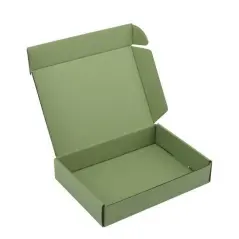

Essential Tools for Measuring Shoe Box Dimensions
- You don't need fancy equipment to get accurate measurements, but using the right tools can ensure consistency. Here is what you need:
- Measuring Tape or Steel Ruler: Telescopic tape measures are suitable for most boxes, but steel rulers are suitable for smaller and more precise measurements (for example, for children's shoe boxes). Avoid using soft fabric tapes as they can stretch and distort the result.
- More precise instruments:Digital Caliperis your other option. For ultra-precise measurements, especially if you design custom boxes or use thin materials, digital calipers can help capture thickness and small dimensional variations as small as 0.1 millimeters.
- Flat Surface: Place the shoebox on a level table or floor to ensure that your measurements are straight and consistent. Uneven surfaces can cause measurements to be tilted and inaccurate.
- Notebook or Digital Tool: Record the measurement results immediately (in inches and centimeters if necessary) to avoid confusion. Most carriers and packaging suppliers require measurements of specific units, so it is helpful to have these two types of units on hand.

Step-by-Step Guide to Measuring Shoe Box Dimensions
Shoe box dimensions are always recorded in the order:Length × Width × Height (L×W×H). Follow these steps to get it right, whether you’re measuring an existing box or designing a new one:
Step 1: Measure the Length
The length is the longest on the outside of the shoebox. Place the box on a flat surface with the opening facing upwards. Pick up the tape measure and move from the outer edge of one end to the outer edge of the other end - this is the length. For boxes with individual LIDS, measure the internal fit at the bottom (not the lid) and include the length of the lid if measuring transportation. To ensure accuracy, measure three times: near each corner and at the center. Use the minimum internal measurement to measure the fit of the product, or use the average external measurement to measure the dimensional specifications.
Step 2: Measure the Width
The width is the shorter side perpendicular to the length. Place the box on a flat surface and measure from the outer edge of one side to the outer edge of the other side (measuring the length perpendicular to you). Similarly, take three readings and average them to maintain consistency. For shoes designed to be wider (such as sports shoes and boots), make sure the width is sufficient to accommodate the widest point of the shoe without squeezing it.
Step 3: Measure the Height
The height is the distance from the bottom of the box to the top edge. For boxes with LIDS, completely close the lid and measure from the bottom to the top of the lid. For individual LIDS, measure the height of the base and the height of the lid separately - this is crucial if you order custom LIDS. For shoes with height (such as heels and boots), the height of the box should be slightly higher than that of the shoes to prevent them from being crushed. Just like length and width, three measurements should be taken and the most accurate reading should be used.
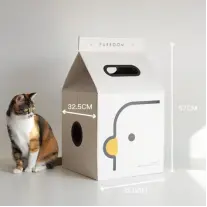
Step 4: Record and Review The Measurement Results
Record your final dimensions as L×W×H, and pay attention to whether they are internal (for shoes to fit well) or external (for transportation and storage). For manufacturing purposes, round to the nearest 1/8 inch (3 mm), or two decimal places if required by the carrier. Carefully examine your measurements - even a small mistake (for example, a one-inch difference in length) can lead to costly errors. If you are designing custom boxes, share these dimensions with your packaging supplier to ensure a perfect fit.
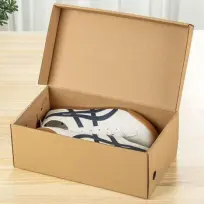
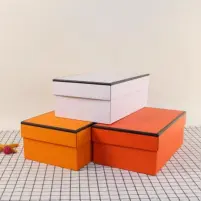
Standard Shoe Box Sizes for Classification
Although there is no universal "one-size-fits-all" shoebox, most brands set standards based on the type of shoes. Use these averages as the starting point, but always measure your specific shoes to confirm:
| Shoe classification
|
Dimensions
(Inches: L×W×H) |
Dimensions (Centimeters: L×W×H) |
| Men’s Shoes (Sneakers, Dress Shoes) | 13 to 14 × 7 to 8 × 4 to 5 | 33 to 35.5 × 18 to 20 × 10 to 13 |
| Women’s Shoes (Flats, Sneakers, Heels) | 12 to 13 × 6.5 to 7.5 × 4 to 4.5 | 30.5 to 33 × 16.5 to 19 × 10 to 11.4 |
| Children’s Shoes | 7 to 10 × 5 to 6 × 3 to 4 | 18 to 25.4 × 12.7 to 15.2 × 7.6 to 10.2 |
| Boots (ankle boots, mid boots) | 14 to 16 × 8 to 10 × 8 to 12 | 35.6 to 40.6 × 20.3 to 25.4 × 20.3 to 30.5 |
| Sneakers (High-Top) | 13 to 15 × 7 to 9 × 5 to 7 | 33 to 38.1 × 17.8 to 22.9 × 12.7 to 17.8 |
| ... | ... | ... |
Note: These are all averages - the signature styles of brands like Nike or Adidas may vary slightly. Always measure the actual size of the shoes you package to avoid relying solely on standard sizes.
Professional Tips for The Perfect Shoe Box Size
- Account for Packaging Materials: If you use tissues, foam or insoles, add 0.02-0.25 inches (0.5-6 millimeters) to your internal dimensions to ensure comfort without being overly crowded.
- Start With Precise Measurements:The accurate size of the shoebox is a small but important detail that can affect all aspects of your footwear business - from transportation costs to customer satisfaction. By following this step-by-step guide, using the right tools and referring to standard sizes, you can ensure that your shoebox fits perfectly, protects your products and supports the success of your brand.
- OneMore Point Needs To Be Reminded To You: there’s no substitute for measuring your actual shoes—standard sizes are a starting point, not a final solution.
Final Thoughts
Whether you’re packaging shoes for your independent store, fulfilling e-commerce orders, or creating custom shoe boxes for your brand, getting measurements right saves you time, cost and avoids packaging fitting issues in the long run. YuCai’s factory will offer precise custom sizing customize to shoe styles, premium materials for protection and texture, flexible small-batch customization with fast lead times, and personalized brand printing. Accurate measurements unlock the full potential of our custom packaging for a perfect product and brand fit. Happy measuring!
FAQ:
Q1:Where should I place a shoebox to measure it accurately?
A1: You should put it in a flat/level surface (table or floor).
Q2: How can I ensure my packaging is a 100% perfect fit for my shoe sizes?
A2: We can make a sample for you to test before mass production.
Q3: What tool is best for measuring shoe boxes?
A3: A retractable measuring tape.
Q4: Why do accurate shoe box measurements matter?
A4: They affect shipping costs, product protection and storage.
Post time: Feb-06-2026