
In today's competitive business environment, every operational detail counts toward the bottom line. While packaging is often viewed as a necessary cost center, this perspective overlooks its profound potential as a strategic tool for efficiency and savings. The shift from generic, one-size-fits-all solutions to tailored custom packaging is not merely an aesthetic upgrade; it is a financial optimization strategy.
Custom packaging, designed around the specific dimensions, fragility, and brand identity of your product, systematically attacks hidden costs across logistics, operations, and marketing. By moving beyond the limitations of standard boxes, businesses can unlock a cascade of savings that directly enhance profitability. This exploration delves into five pivotal ways that a thoughtful investment in custom packaging—from robust corrugated boxes to elegant gift boxes—translates into significant and sustainable cost reductions.
1.Precision Engineering: Slashing Material and Shipping Expenses
The most direct financial impact of custom packaging lies in the drastic reduction of material use and associated shipping fees. Off-the-shelf packaging solutions inevitably lead to a poor fit, forcing products into containers that are too large. This mismatch necessitates excessive amounts of cardboard, void fill, bubble wrap, and tape—each adding incremental cost and weight. A custom-designed corrugated box or paper box packing solution, engineered to your product’s exact contours, eliminates this waste at its source. By using the minimum material required for safe transport, the per-unit cost of the packaging itself drops immediately.
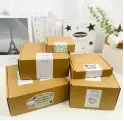
Beyond material savings, the volumetric efficiency of custom packaging revolutionizes shipping economics. Carriers universally utilize dimensional weight (DIM weight) pricing, which calculates shipping costs based on the space a package occupies, not just its actual weight. A slimmer, perfectly fitted card box or rigid box can reduce its shipped volume by 30% or more compared to a poorly chosen standard box. For businesses with high shipping volumes, this reduction compounds into massive annual savings on freight bills. The initial investment in custom dies and design is quickly recouped through these ongoing efficiencies, making precision packaging a cornerstone of lean logistics.

2.The Ultimate Insurance: Dramatically Lowering Damage and Returns
Product damage during transit is a severe and multi-faceted drain on profits. The direct costs include replacing the item, managing reverse logistics, and issuing refunds. The indirect costs—damaged brand reputation, negative reviews, and lost customer lifetime value—are often far greater. The root cause is frequently inadequate packaging that allows items to shift, collide, or be crushed. Custom packaging serves as a form of proactive insurance. For delicate electronics or luxury items, a structured rigid box provides superior crush resistance and a secure, rattle-free environment. For heavier or irregularly shaped items, a double-walled corrugated box with custom-molded pulp or cardboard inserts cradles the product immovably.

This engineered protection leads to a measurable decline in damage rates and customer-initiated returns. Allocating slightly more budget to a protective, custom gift box or fortified card box is a calculated risk mitigation strategy. It prevents the substantially larger financial loss associated with a single damaged shipment. The equation is straightforward: spending an extra fifty cents on better packaging can easily save twenty dollars in replacement costs and preserve a customer relationship worth far more. In this way, custom packaging directly safeguards revenue and brand equity.
3.Operational Efficiency: Accelerating Packing and Reducing Labor Costs
Warehouse labor is a significant operational expense, and inefficient packaging processes are a major contributor. Time spent wrestling with ill-fitting boxes, cutting down oversized containers, or assembling multiple pieces of protective filler is both costly and inconsistent. Custom packaging is designed for speed and ease on the packing floor. Solutions like auto-bottom corrugated boxes that form with a simple push, or paper box packing with integrated, tuck-in closures, can cut packing time per unit by half or more.

This streamlined process has a direct impact on the bottom line. It increases throughput, allows existing staff to handle higher order volumes, and reduces the labor hours required per shipment. Furthermore, a simplified system with one optimized box and insert minimizes training time for new employees and reduces packing errors. The professional, seamless assembly of a well-designed rigid box also enhances the customer experience without adding a single second of extra labor. The cumulative effect is a leaner, faster, and more cost-effective fulfillment operation, where packaging is an enabler of productivity, not a bottleneck.
4.Integrated Marketing: Boosting Brand Value While Reducing Ad Spend
Exceptional custom packaging performs a dual function: it protects the product and promotes the brand. In the era of social media and the “unboxing experience,” packaging is a powerful, tactile marketing channel. A beautifully designed gift box or a boldly branded card box creates a memorable moment that customers are eager to photograph and share online. This generates authentic, user-generated content—the most credible form of advertising—at virtually no additional cost. Moreover, premium packaging, such as a high-quality rigid box, elevates the perceived value of the product inside, justifying price points and fostering brand loyalty.

This intrinsic marketing power allows businesses to re-evaluate their external advertising budgets. A portion of funds traditionally allocated solely to digital ads can be strategically redirected into creating packaging that markets itself. Unlike a fleeting online impression, a physical corrugated box or paper box packing adorned with your brand story travels directly into the customer’s home and often remains visible. This turns every shipment into a brand-building touchpoint, effectively reducing customer acquisition costs and increasing the lifetime value of each client. The packaging ceases to be a mere container and becomes a profit center driven by marketing efficiency.
5.Logistics Optimization: Maximizing Storage and Simplifying Inventory
Inefficiencies in packaging create logistical headaches long before an order is shipped. Bulky, inconsistently sized boxes consume excessive warehouse space, both as flat stock and as pre-packed orders. This wasted cubic footage incurs real costs in terms of larger warehouse footprints or inefficient use of existing space. Custom packaging can be designed with storage optimization in mind. Flattened corrugated box blanks can be die-cut to nest perfectly on pallets, and rigid box sleeves can be designed for compact stacking.
Perhaps more importantly, a custom packaging strategy reduces inventory complexity. Instead of managing a sprawling stock of a dozen different-sized generic boxes and an array of fill materials, a business can implement a streamlined system of two or three primary custom sizes that accommodate all product lines via adaptable inserts. This simplification leads to fewer SKUs to track, reduced risk of stock-outs of packing materials, less warehouse clutter, and more efficient use of storage space. In the world of logistics, space is money. A lean, optimized packaging inventory directly contributes to a leaner, more manageable, and less expensive supply chain.
FAQs on Custom Packaging and Cost Savings
Q1: We’re a small business. Aren’t the upfront design and tooling costs for custom packaging like a rigid box prohibitively high?
While custom packaging involves initial setup costs for structural design and cutting dies, these are one-time investments amortized over your entire production run. For smaller businesses, many suppliers now offer accessible, low-minimum options for custom-printed corrugated boxes or card boxes. The key is to calculate the Total Cost of Ownership. The ongoing savings from reduced material waste, lower shipping fees, and fewer product returns almost always outweigh the initial outlay. Starting with one hero product’s packaging is a common and effective strategy to test and realize these benefits.
Q2: How can I balance the desire for a luxurious gift box unboxing experience with sustainability and cost-efficiency?
Luxury today is increasingly defined by thoughtful, responsible design, not just excess. The most elegant and cost-effective solution is often “less but better.” Focus on structural efficiency first—a perfectly sized box uses less material. Then, select high-quality, recycled, or FSC-certified materials for your paper box packing or rigid box. Subtle, sophisticated finishes like debossing or spot UV on a card box can create a high-end feel without lavish layers. This approach minimizes environmental impact and material costs while maximizing perceived value, aligning sustainability with smart economics.
Q3: My product line has variable sizes. Does effective custom packaging mean I need a unique box for every single item?
Not necessarily. The most cost-effective strategy is often a modular or tiered packaging system. You can design a core set of 2-4 corrugated box sizes that cover 80% of your products. Then, use universal, customizable internal components—such as corrugated dividers, adjustable foam inserts, or tissue paper—to secure different items within these standard boxes. For a cohesive brand look, you might use the same style of gift box in small, medium, and large. This approach maintains the benefits of brand consistency and protection while avoiding the inventory nightmare and cost of dozens of unique box SKUs.
Post time: Dec-12-2025