
From protecting fresh produce to powering global logistics, corrugated fiberboard is everywhere, but its engineering brilliance and sustainability are often overlooked. This guide provides a detailed account of what corrugated is, its composition, practical benefits, our quality assurance process, and why fruit grower supply is the preferred choice for businesses.
What Is Corrugated? A Clear Definition for Modern Businesses
At its core, corrugated cardboard (commonly known as corrugated fiberboard) is a lightweight and durable engineering packaging material designed to protect, transport and display products across industries. Contrary to common misconceptions, it is different from thin cardboard - corrugated is a layered structure with strength and versatility, used everywhere from shipping boxes to custom retail displays.
The Science Principle Behind Corrugated Paper: How Is It Constructed
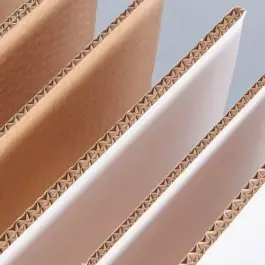
Corrugated fiberboard consists of two key components: the liner board and the corrugated medium, both of which are made of special cardboard. High-pressure machinery is used to form a series of wavy ridges (referred to as grooves) of corrugated medium, and then they are bonded between one or more layers of flat inner lining plates. This flute structure - imitating the strength of architectural arches - is a combination of the unique lightness and strength of corrugated plates.Single-wall (one layer of groove between two layers of gaskets), double-wall (two layers of grooves) and triple-wall (three layers of grooves) configurations are available. The corrugations can be customized to meet the specific protection requirements of any product, from precision electronic products to heavy industrial components.
What Is Corrugated Material Made Of? Sustainable Development Begins At The Source
The foundation of the sustainability of corrugated lies in its raw materials, which are renewable and recyclable, and usually come from responsibly managed forests. Unlike plastic or metal packaging, corrugated packaging relies on natural fibers that can be replenished and reused, making it the cornerstone of eco-friendly packaging strategies.
Main Raw Materials: Cardboard And Corrugated Medium
The lining board and corrugated medium are mainly made of wood fibers, which mainly come from two sources:
Virgin wood fiber: Derived from sustainably managed working forests where more trees are planted than harvested.
Recycled Fiber: Recycle from used corrugated boxes, waste paper and production waste. Approximately 52% of new corrugated products contain recycled fibers, and 89% of corrugations are recycled and reused globally.
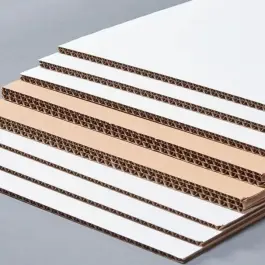
The quality of these raw materials directly affects the final product: the inner lining board (smooth outer and inner layers) determines printability and surface durability, while the corrugated medium (groove layer) provides cushioning and compressive strength. For high-performance applications, manufacturers can use kraft liner boards - made from at least 80% sulfate wood pulp - to enhance tear resistance and crack resistance.
What Makes Corrugated Materials So Practical? 5 Unbeatable Benefits
For over 150 years, corrugated paper has been the preferred choice for packaging as it addresses the most critical challenges faced by businesses: protecting products, reducing costs, and adapting to diverse demands. Its practicality stems from five key advantages that other packaging materials cannot match.
- Exceptional Strength
Pound by pound, corrugated offers more strength than most packaging materials, including wooden crates and plastic containers. The groove structure, as a shock absorber, absorbs vibration and shock during transportation, which is the key to reducing product damage. This strength also allows for stable stacking, minimizing the movement of transport containers and warehouses.
- Lightweight and Cost-Effective
Compared to rigid packaging alternatives, corrugated is significantly lighter, which lowers freight costs—especially for international shipping, where weight directly impacts fees. Its manufacturing process is also highly automated, allowing for fast, large-scale production that keeps costs low for businesses of all sizes. Additionally, corrugated’s customizable design means less material waste, further reducing expenses.
- Suitablefor Many Industry
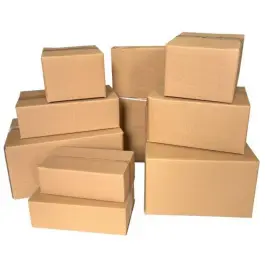
Corrugated paper can be cut, folded and printed into almost any shape or size, making it an ideal choice for industries ranging from agriculture (producing crates) to e-commerce (shipping boxes) to retail (point-of-purchase display). It can also be treated together with moisture-proof coatings for food packaging or static control finishes for electronic products, and can even meet the most special requirements.
- Easy to Customize and Brand
Corrugated paper, as a mobile billboard business, supports high-resolution printing of various technologies, including flexographic, offset and screen printing. Customized graphics, logos and product information can be directly printed on materials, thereby enhancing brand awareness throughout the supply chain and at the point of sale.
- Safe for Sensitive Products
Corrugated is non-toxic, food-safe and easy to disinfect, making it perfect for packaging fresh produce, medicines and food items. It will not leach chemical substances into the product, ensuring compliance with industry regulations and consumer safety standards.
A Brief History of Corrugated Paper: From Insignificant Beginnings to Necessary Packaging
Although corrugated fiberboard is the main material for modern packaging, its history can be traced back over 150 years, evolving from a simple protective layer to the multi-functional and durable material we rely on today. Understanding its history highlights its innovation and necessity for industries such as agriculture and flower cultivation.
- The Early Days: Corrugated as a Protective Liner (1850s–1870s)
The story of corrugated paper began in 1856 when British inventor Edward Charles Healy and American Ellis Jones applied for a patent for the first corrugated paper. Originally used as the lining of high hats (for structure and protection), it was not until 1871 that the American Albert L. Jones obtained the first patent for single-line corrugated cardboard - it was first used to package glass and fragile items.
- The Game-Changer: Double-Wall Corrugated (1874)
Just three years later, in 1874, Oliver Lang improved Jones' design by adding a second lining and creating the first double-layer corrugated fiberboard. This innovation has completely transformed packaging: two pads are sandwiched between the grooved medium, significantly enhancing strength and cushioning, making corrugated suitable for transporting heavier and more delicate products. By the end of the 19th century, corrugated cartons began to replace wooden crates for transporting fruits, vegetables and other perishable items, laying the foundation for the application of corrugated cartons in today's agriculture.
- 20th Century Evolution: Mass Production and Industry Adaptation
Corrugated paper was widely adopted and improved in the 20th century. With the rise of industrialization and global shipping, corrugated paper became a necessity in business. In the 1920s, automatic corrugating machines were developed, allowing for large-scale production and cost reduction - enabling small businesses, fruit growers and flower shops to use them. By the middle of this century, corrugated paper has become the preferred packaging for fresh produce because its lightweight yet sturdy design reduces damage during transportation, and its breathability helps keep fruits and flowers fresh.
- Modern Corrugated: Innovation Meets Sustainability
Today, corrugated paper continues to evolve, focusing on sustainability and customization. Manufacturing advances allow tailored corrugation sizes—from small berry ventilation boxes to sturdy mass-production crates. Growing environmental awareness has driven increased use of recycled materials and responsible forestry, making corrugated a natural, renewable solution for modern businesses.
How We Ensure High-Quality Corrugated for Every Business
Providing high-quality corrugated fiberboard not only requires advanced equipment, but also a commitment to quality throughout the entire process from raw material selection to final production. At every step, we adhere to strict standards to ensure that our corrugated products meet the unique needs of enterprises, regardless of industry.
Our Quality Assurance Process: From Start to Finish
When it comes to quality, we have no room for compromise. Our strict quality assurance (QA) process is integrated into every stage of production to ensure the consistency, durability and reliability of each corrugated paper we produce. The main steps include:
Raw material testing: Each batch of cardboard and corrugated paper medium undergoes strength, fiber quality and sustainability tests to ensure that we only use materials that meet our high standards.
Production monitoring: Our team uses real-time testing tools during the production process to inspect groove formation, glue bonding strength and thickness, and to identify any issues before they affect the final product.
Final inspection: Before shipment, each order undergoes a final inspection to ensure it meets the customer's specifications - from size and shape to print quality and durability.
Final Thoughts: Corrugated Is More Than Just a Box
Corrugated fiberboard is a universal, sustainable and practical packaging solution that drives global supply chains and supports enterprises. Our high-quality products feature structural strength and ecological friendliness, providing consistent reliability. Fruit farmers Supply provides tailor-made corrugated solutions for agricultural product transportation, retail release and sustainable development goals. Contact us immediately to support your business.
FAQ:
Corrugated Fiberboard Short Questions & Answers (5 Items)
Question 1: What was the initial use of the first patented corrugated paper, and when did it first become packaging for fragile items?
Answer: Its initial use was as a liner for tall hats; it first became fragile item packaging when a single-liner corrugated board was patented.
Question 2: Which corrugated design innovation laid the foundation for its agricultural use, and why?
Answer: The double-wall corrugated design, as it enhanced strength and cushioning, allowing it to replace wooden crates for produce shipping.
Question 3: What are the sources of virgin and recycled fiber for corrugated, and how do they affect product quality?
Answer: Virgin fiber comes from sustainable forests, and recycled fiber from used boxes. They influence printability, strength and cushioning.
Question 4: Why is corrugated suitable for fruit growers and floral businesses?
Answer: It has a good strength-to-weight ratio, customizable ventilation, is cost-effective and non-toxic.
Question 5: What sustainable measures has the corrugated industry adopted?
Answer: It uses renewable raw materials, recycled fiber, and renewable biofuels for manufacturing.
Post time: Apr-01-2026