
In the luxury retail, beauty, gift, and e-commerce sectors, high-end packaging is crucial for protecting products, enhancing brand value, and optimizing logistics. As a upgraded variant of traditional rigid boxes, foldable rigid boxes have gained widespread popularity for their unique combination of sturdiness and flexibility.
-
What Is a Foldable Rigid Box?
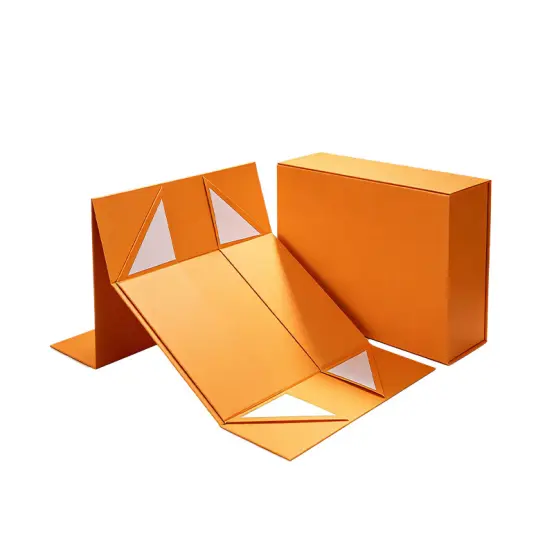
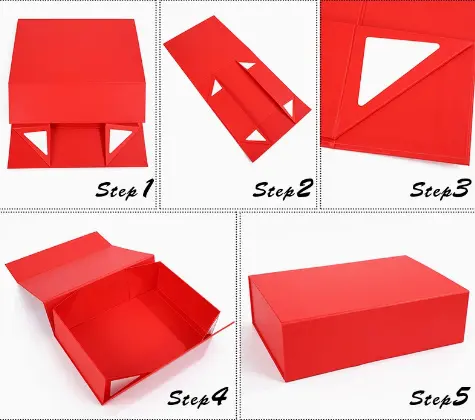
A foldable rigid box is a high-end packaging container that integrates the sturdiness of traditional rigid boxes with the foldable convenience of ordinary cartons. Like standard rigid boxes, its core is made of thick grey cardboard or particleboard, covered with decorative materials such as premium coated paper, fabric, or leather, ensuring excellent durability and a luxurious appearance. What sets it apart is the precise pre-fold crease lines pressed on its edges and corners during production, allowing it to be folded into a flat sheet without glue or tools for storage and transportation. When in use, it can be quickly unfolded and locked into a firm three-dimensional box, balancing high-end texture with practicality.
Unlike fragile folding cartons, foldable rigid boxes maintain their shape under moderate pressure, providing reliable protection for valuable or fragile items. They also outperform traditional fixed rigid boxes in flexibility, solving the latter’s pain points of bulky storage and high transportation costs. With finishes like embossing, hot stamping, or spot UV coating, foldable rigid boxes are not just packaging but also a reflection of brand quality, enhancing the perceived value of internal products.

-
How Is a Foldable Rigid Box Manufactured?
The production of foldable rigid boxes involves a precise, multi-step process that combines craftsmanship and specialized machinery, similar to traditional rigid boxes but with additional steps to enable foldability. It starts with material preparation: thick grey board or particleboard is cut into predefined sizes for the box base, sides, and lid using a die-cutting machine. Next, the grey board is folded and bonded to form a rigid core, with edges reinforced to ensure structural stability.
Decorative coverings—such as printed paper, fabric, or leather—are then carefully adhered to the core with an automatic laminating machine to avoid wrinkles or air bubbles. The key step for foldability is pressing professional pre-fold crease lines on the box edges and corners, ensuring smooth folding and unfolding without damaging the structure. After covering, the box is shaped and trimmed, with excess material removed and corners smoothed. Optional finishes like embossing, hot stamping, or spot UV coating are added to enhance aesthetics. Finally, quality inspection verifies dimensions, adhesion, and overall assembly before the boxes are folded flat for storage and transportation.
-
Key Advantages of Foldable Rigid Boxes
Foldable rigid boxes stand out for their practical advantages that address the pain points of traditional packaging. Firstly, they save storage and logistics costs significantly. Traditional rigid boxes are pre-assembled into three-dimensional shapes, occupying large warehouse space and increasing transportation costs. Foldable rigid boxes are stacked flat, reducing storage space by over 70% and lowering warehouse rental and inventory management expenses. Their flat design also reduces shipping volume, cutting fuel consumption and logistics costs.
Secondly, they improve packaging efficiency. The pre-set crease design allows quick unfolding and molding without manual bonding or complex assembly, enabling new employees to master the process rapidly. This is particularly beneficial during peak order seasons, boosting daily packaging output. Thirdly, they maintain high-end quality and brand image. With a smooth surface, three-dimensional hardness, and customizable finishes, foldable rigid boxes provide an elegant unboxing experience consistent with luxury rigid boxes, enhancing customer satisfaction and repurchase rates.
-
Applications of Foldable Rigid Boxes
Foldable rigid boxes have strong versatility and are widely used in various high-end product sectors. In the beauty and skincare industry, they are ideal for facial serum sets, eye cream gift boxes, and limited-edition cosmetics, effectively protecting glass bottles and fragile components. In the jewelry and fashion accessory industry, they package necklaces, earrings, watches, and luxury scarves, elevating product added value with their premium texture.
In the food and health gift industry, they are suitable for high-end tea, bird’s nest, nutritional supplements, and holiday gift boxes, meeting food-grade safety standards while highlighting a festive and high-end feel. Additionally, they are widely used for digital electronic accessories, smart wearables, boutique home textiles, and corporate customized souvenirs.
Whether for daily retail or seasonal limited-edition packaging, foldable rigid boxes can meet personalized customization needs, adapting to different product shapes and brand positioning.
-
Sustainability of Foldable Rigid Boxes
As global demand for sustainable packaging grows, foldable rigid boxes align with low-carbon and eco-friendly trends. Qualified foldable rigid boxes use recyclable high-quality cardboard and non-toxic, environmentally friendly printing inks, which can be fully recycled and degraded without polluting the environment. Compared with plastic gift boxes and non-degradable composite rigid packaging, they have a much lower carbon footprint.
Their foldable design also contributes to sustainability: flat transportation reduces the number of delivery vehicles and fuel consumption, indirectly cutting carbon emissions in the logistics link. Manufacturers are further optimizing sustainability by using FSC-certified paper, plant-based adhesives, and recycled grey boards, simplifying structures to reduce material waste, and developing easily disassembled designs. Circular economy practices, such as recycling programs for used boxes or secondary packaging reuse, extend their life cycle, balancing luxury and environmental responsibility.
-
Market Outlook of Foldable Rigid Boxes
Industry analysts predict that foldable rigid boxes will become the mainstream of high-end packaging in the next three to five years. With rising warehouse rental and labor costs, and increasing consumer demands for packaging appearance and unboxing experience, traditional fixed rigid boxes will gradually lose market share. Foldable rigid boxes, with their dual advantages of high-end texture and low operating costs, have been adopted by over 60% of cross-border e-commerce beauty brands and domestic chain gift enterprises.
In the future, with the upgrading of packaging manufacturing technology, foldable rigid boxes will achieve more intelligent size customization and faster mass production, further helping enterprises reduce costs and improve efficiency. As consumers pay more attention to luxury and sustainability, foldable rigid boxes will continue to evolve, becoming an essential packaging choice for high-end brands.
Conclusion
Yucai foldable rigid boxes are a high-end, practical, and eco-friendly packaging solution that combines the sturdiness of traditional rigid boxes with foldable convenience. They solve the pain points of traditional rigid packaging, save costs, enhance brand image, and meet sustainable development trends. Widely applicable to various high-end industries, they will play an increasingly important role in the modern packaging market, helping brands gain competitive advantages in the fierce market competition.
FAQS:
Question 1
What materials are commonly used for the core of a rigid box?
Answer: The core of a rigid box is usually made of thick grey cardboard or particleboard.
Question 2
What finishing processes can enhance the appearance of a rigid box?
Answer: Finishes such as embossing, peeling, gilding, or spot UV coating can enhance the appearance of a rigid box.
Question 3
What is one circular economy practice adopted for the sustainable development of rigid cartons?
Answer: One circular economy practice is providing recycling programs for used rigid cartons or reusing them for secondary packaging.
Question 4
Why is clearly marking materials important for the sustainable development of rigid cartons?
Answer: It is important because it helps consumers and recycling facilities handle the rigid cartons properly, especially those with mixed material designs, thus improving recyclability
Post time: Apr-20-2026